


How to Paint a Car

HOW TO PAINT A CAR

Eastwood's step-by-step guide shows you how to paint a car from bare metal to color sanding and buffing. Watch the video, download the PDF resources, and shop the products below to get a professional paint job at a DIY price.

Prep    |    Body Filler    |    Primer    |    Paint    |    Cut & Buff

Prep   |   Body Filler   |   Primer   |   Paint   |   Cut & Buff

Step #1: Prep

1.  Strip the car to bare metal with the Eastwood Contour SCT®, Dual-Action (DA) Sander with 80 grit paper, or with a chemical stripper.

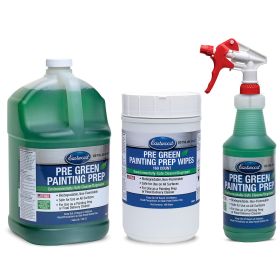
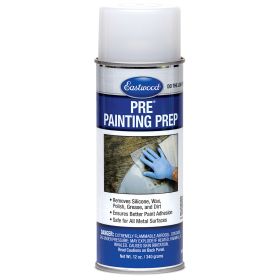
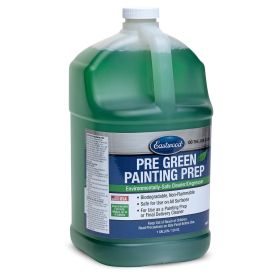
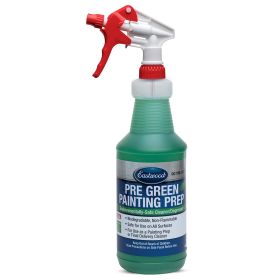
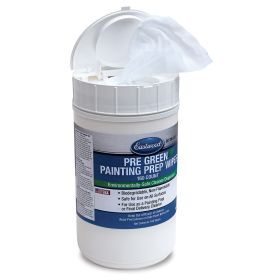
2.  Wipe the car down with PRE Painting Prep until panels are clean.

Supplies
Step #2: Body Filler

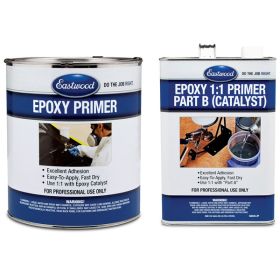
1.  Apply epoxy primer to protect the panels from rust.

  • Use masking paper and tape to cover any areas you don’t want primer.
  • Ensure panels are clean before spraying.
  • Spray 2-3 coats of epoxy primer on the entire car.
  • Let the primer dry for 2-3 days.

2.  Apply body filler.

  • Wipe the car with PRE Painting Prep to remove any contaminants on the surface.
  • Sand the entire car with 80 grit to reveal low spots.
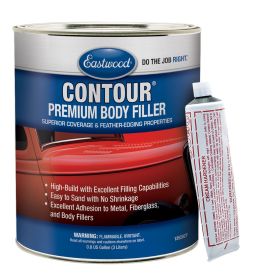
  • Mix the body filler and hardener on a dedicated mixing board.
  • Skim coat the entire panel using a spreader.
  • (Optional) Spot fill the low spots if you want to save on filler.

3.  Block sand.

  • Allow the body filler to harden for at least 15 minutes.
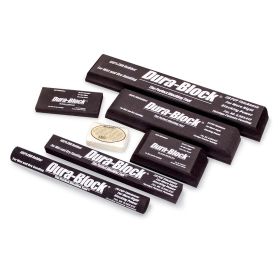
  • Sand with 80 grit paper using a cross hatch pattern. For a cleaner approach, use the Eastwood Contour DSB (Dustless Sanding System).
  • Wipe down the panels and apply the guide coat.
  • Sand the guide coat to clearly identify lows that may have been previously missed.
  • Apply the body filler over any residual low spots.
  • Apply the guide coat while advancing through 80-320 grit paper. This will help ensure you remove sanding scratches from the previous grit.
  • Remember to be patient. It is worth it in the end.
Eastwood Body Filler
Applying Eastwood body filler to a car
Block sanding body filler with the Eastwood Contour DSB.
Supplies
Step #3: Primer

1.  Apply epoxy primer. Eastwood offers OptiFlow Roll-On Primer systems that make it easy to apply primer anywhere. If you prefer a traditional epoxy primer, Eastwood offers a variety of colors.

  • Apply another 1-2 coats of epoxy primer to seal any bare metal.
  • Wait 2-3 days for the primer to dry.
  • Block sand the entire car with 320 grit.

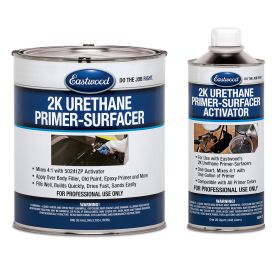
2.  Apply primer surfacer. If the body work is complete you can skip this step and apply urethane primer.

  • Apply 3 wet coats of your chosen primer.
  • Allow 15 minute of flash time in between coats. This will help fill in any missed sanding scratches.

3.  Final block sand.

  • Apply the guide coat to the entire car.
  • Sand with 320 grit and then 400 grit. Finish with 600 grit.
  • Ensure that you didn’t miss any sanding scratches before moving onto basecoat painting.
Priming a car with Eastwood OptiFlow Roll-On Primer System
Priming a car with spray on primer
Supplies
Step #4: Paint

1.  Basecoat. If you are looking for a factory-matched paint color, check out our OEM Select Paint with over 75,000 colors matched to OEM factory code. Eastwood also offers pre-mixed basecoat paint.

  • Wipe the entire car with PRE Painting Prep until it is clean, making sure to use lint free rags.
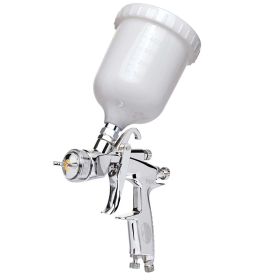
  • Mix the basecoat and activator if needed, and pour through a strainer into the paint gun. 
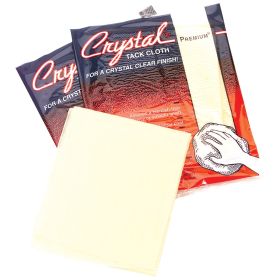
  • Wipe the car with a tack rag to remove any dust or debris.
  • Spray 3 medium-wet coats with 50% overlap.
  • Spray the jams and edges first.
  • Allow 15 minute flash times between coats.
  • If you're using a metallic paint, you can add a “drop coat” with lower pressure to allow flake to lay even.

2.  Clear coat. 

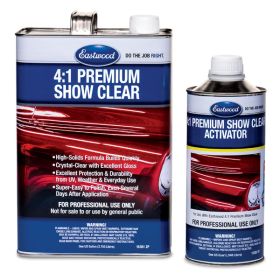
  • Choose an activator based on the temperature you're painting in.
  • Wipe the panel with tack cloth before spraying.
  • Spray one semi-dry tack coat for better adhesion.
  • Spray 2-3 wet coats with 50-75% overlap. Allow for proper flash time between coats.

3.  Sit back, let the clear coat cure.

Mixing OEM Select Basecoat Paint
Spraying paint on a car
Supplies
Step #5: Cut & Buff

1.  Wet sand the entire car with 1500 grit sandpaper on a DA with an interface pad.

  • The interface pad will help eliminate burn through and stay away from body lines.
  • Periodically, wipe down the panel, and check your progress.
  • The job is completed when all texture is gone, and the panel is one solid color.
  • Carefully hand sand body lines and apply even pressure while doing so.

2.  Wet sand the entire car with 2000 grit. The goal is to remove any 1500 grit sanding scratches.

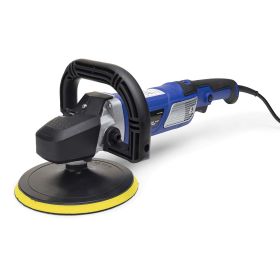
3.  Use the three-step system to polish the paint back to mirror shine.

  • Step 1: wool pad or course foam pad and fast cutting compound

  • Apply 4-5 dime size drops of the product to the face of the pad. Press the pad to the surface of the vehicle and turn the polisher on. Operate the polisher at 1000-1200 RPM. Work in 2-feet by 2-feet sections. Apply more product to the pad as needed when the pad starts to get dry.

  • Once completed with a number of 2-feet by 2-feet sections on a single panel, increase the speed of the polisher to 1200-1500 RPM and overlap all areas of the single panel to blend properly. This might take some practice, stay patient.

  • Be cautious of edges and don’t stay in one place for too long.

  • Remove all remaining product from the surface with a clean soft microfiber towel and then repeat this process on the remaining panels of the vehicle.

  • Step 2: Medium or fine foam pad and finishing polish

  • This product can be used with a rotary or a orbital polisher. Attach a proper foam polishing or finishing pad to the polisher.

  • Apply 4-5 dime size drops of product to the face of the pad. Press the pad to the surface of the vehicle, and turn the polisher on. Operate the polisher at 1000-1200 RPM. Work in 2-feet by 2-feet sections. Apply more product to the pad as needed when the pad starts to get dry.

  • Once completed with a number of 2-feet by 2-feet sections on a single panel, increase the speed of the polisher to 1200-1500 RPM, and overlap all areas of the single panel to blend properly.

  • Remove all remaining product from the surface with a clean soft microfiber towel, and then repeat this process on the remaining panels of the vehicle. Move on to applying wax or ceramic coatings.

  • Step 3: Fine foam pad and carnauba cream wax or spray on wax

  • An orbital polisher is highly recommended. Apply 3-5 nickel size drops of wax to a clean and soft foam finishing or waxing pad.

  • Press the pad to the surface of the panel and turn the polisher on. Operate the polisher at 2500 RPM. Spread the wax over the panel in an overlapping cross hatch pattern. Repeat this process on all panels of the vehicle, adding more product to the polishing pad as needed. Allow it to dry to a haze.

  • Using a clean, soft microfiber towel, remove the wax, beginning at the same place that you started the application  Continue to each panel of the vehicle in the order that the product was applied, and wipe to a brilliant shine. Make sure to turn the towel over or fold to a clean side periodically. It is recommended to use multiple towels in this process to ensure the best results.

4.  Wipe down the car with a microfiber cloth to remove any leftover compounds. You now have smooth, showcar finish!

Polishing a paint job
3-Step Polishing System
Final results for painting a car
Supplies

HOW TO PAINT A CAR RESOURCES

GLOSSARY

What is guide coat when doing bodywork?

Guide coat is a coating that helps identify low spots on your panels. A light misting of guide coat over primer will highlight low and uneven areas. Keep sanding and applying guide coat until the guide coat disappears. We also offer perfect panel check fluid that gives your coating a temporary gloss finish that will help you identify blemishes that are unseen to the naked eye.

What is a tack coat when painting?

A tack coat is when you apply a very light coat of your coating to help form an adhesive bond between your previous and current coating. This can be using when spraying primer, basecoat or clear coat.

What is a tack rag?

A tack rag is a tacky cloth that will pick up look debris or contaminates. Use a tack cloth prior to painting to ensure a clean work surface.

What is basecoat paint? What is single stage paint?

A single stage is an all-in-one system. Your color coat and clear coat are mixed into one coating. This makes the process much easier for the beginner. A basecoat paint is just the color coat and still requires a clear coat on top for UV protection and the gloss. A basecoat system will typically have better depth then a single stage system.

What is a wet coat when painting?

A wet coat means the paint will be glossy when you are applying it with little to no texture.

What is wet sanding?

Wet sanding is a process that uses water to wash away dirt or sanding dust when sanding.

What is body filler?

Body filler is a putty-like substance that helps fix minor dents or scratches on a vehicle.

Perfect Your Trade with On-Demand Classes

Take Your Skills to the Next Level
& Learn from the Experts!

Eastwood University offers classes in automotive restoration, fabrication and customization skills.

Professional Paint at a DIY Price

TOUCH-UP
BRUSHES & PENS

Available in ANY OEM Color. 

ALL PRODUCTS

Page
per page

Items 1-24 of 75

Page
per page

Items 1-24 of 75

Eastwood Teaches You How to Paint Your Car!

Watch the video above as Eastwood walks you through every step of painting a car. We show you how to do the bodywork to get the car straight, spray epoxy and high build primers, sand to perfection, prep for paint, and ultimately spray the color and clear. We supply detailed instructions of every step as well as the supplies you need to do the job right. This list of steps and supplies will make it easy for you to follow and make sure you have everything you need on your way to perfection. Bookmark this URL and download/print the PDFs for future reference.


Since 1978 Eastwood has been supplying products to the people who want to do the job right. Eastwood offers a complete line of hand tools, welders, plasma cutters & accessories, metal working tools, powder coating supplies, paint and paint guns, specialty paints and hard to find products, all for the DIYer. Eastwood has all the tools and supplies you need to restore your car, truck or motorcycle.


How to paint a car at home! Learn every step from bare metal to color sanding and buffing. We teach you how to block sand, how to apply body filler, how to sand body filler, how to spray primer, how to spray high build primer, how to sand primer, how to spray basecoat with an HVLP paint gun, how to spray clear and how to color sand and buff to get a perfect finish. We even show you all the tools you need to paint a car. How to paint a car yourself at home.